Monday, June 3, 2013

Surveilance, Disease, Freedom, and Hard Choices


I spent part of this week in Washington D.C. as a producer representative from the National Pork Board's Swine Welfare Committee to a meeting hosted by FAZD. The purpose of the meeting was to bring together the main people charged with protecting the United States from foreign animal and plant diseases. I was interested in attending to learn more of how this topic will impact me as a participate in the Fair Oaks Pig Adventure, where it is anticipated that 200,000 people a year will visit. My son, Samuel Wildman, is doing a summer internship here training the tour guides and greeters. You can follow his adventure at Reflections of a Country Boy.

Fair Oaks Pig Adventure

The meeting turned out to be a room full of three letter acronyms DHS, CBP, APHIS, NPB to name a few.

impressive list of speakers and topics


Here are some of my "take home" observations from the event:

1) There are some really smart, talented, and hard working people in government that want to do a good job of protecting us, the citizens of this country. Looking over the agenda shown above, to refer to most of these speakers as "Doctor" is an understatement.

2) These folks and their peers often risk their lives, whether it be at a port of entry or a border post facing down criminal activity, in a laboratory testing an unknown substance, in the field collecting samples, or in a foreign land asking questions their host is not interested in answering.


A few people show up early to meetings
3) It is a monumental task when you think about all the people and commerce that move in and out of this country everyday and the potential for disease transfer. 160+ staffed and 200+ non-staffed ports of entry along with miles and miles of coast and border that are defacto unofficial ports of entry. And not just people and commerce move across these borders, but wildlife and livestock ranging freely back and forth need attention also.

4) Surveillance, intelligence gathering and privacy rights become hot topics and require considered and negotiated trade offs. Indeed this was the flash point between the producers and the three letter acronyms in the room. We all recognize the other's legitimate desire for more or less as the case may be but disagreement exists about where the trade offs should start and stop.
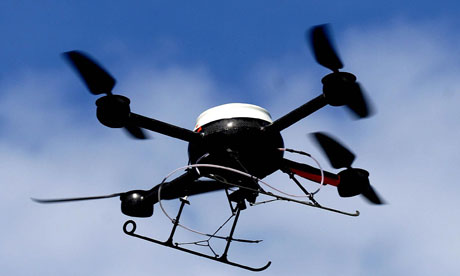
police drone (guardian.co.uk)


The point was made that all (the vast majority) of disease discoveries come from "passive" surveillance. Someone, a citizen, sees something and asks a question, (ie. why is my animal sick) and bingo the authorities have helpful new information.

The capture of the Boston Bomber suspect is illustrative of this surveillance situation. Caught in a gun fight with police (active surveillance) he escapes despite the most intensive surveillance the government can bring to bare ... until the citizens of Boston are released from their homes. Then bingo, a citizen sees something wrong with his boat (passive surveillance) and the authorities have helpful new information.

This passive surveillance is extremely powerful, if properly harnessed, but it is absolutely dependent on the citizen trusting the government to handle the information properly. The discussion made it clear that this trust has been severely damaged by the recent scandals in many agencies at the federal level. Targeting citizens with the IRS, targeting news reporters, spinning tales about Benghazi, the EPA releasing data to activist and leadership that pleads ignorance all cut into the citizen's trust that government will handle information properly. Why would a citizen give passive surveillance information to the authorities if there is doubt they will use it properly or maybe even use it against the citizen that produced it? Trust is fundamental and severely lacking right now.

Questions arise after information is available.

Who owns that information? The citizen? The laboratory? The authority?
What can/must the owner do with that information? The answer is different for each one so the answer is critical.

5) Government, does not think it can, "Do more with less". The thought of "Do the same with less" or "Do less with less" never even surfaced. Government always wants to, "Do more with more". Government doesn't see the irony that if they are going to "Do more with more" then the citizens are going to have to "Do more with less" or "Do the same with less" or "Do less with less". In other words the citizen will have to do exactly that which the government finds impossible! This amounts to a lose of FREEDOM!

The entire meeting was filled with the adjectives more, bigger, larger, faster, greater. I remember no statement that suggested less of anything. Listen/watch this ad that is billed as "conservative" and see what adjectives are used to illustrate my point. Rubio Immigration Reform Ad

6) Government struggles to think of itself as working for the public. The language is always "How can we push this down to the producer?" "How can we control this activity?" "We need to get them to ..." "What does the penalty need to be to stop xyz?" and so on. The language is always "we" (government) and "them" (citizens).

The closest the conversation came to the realization that the citizen runs the government and not the other way around was, "We are glad producers are here, we want to hear what they have to say".

7) Those in power build monuments to themselves. Pharaohs built pyramids, Kings built castles and palaces, Governments build buildings. According to the U.S. Constitution there are three coequal branches of government, the legislative, judicial, and executive. Now let's look at the "monuments" (buildings) in our great capital city of Washington DC. The Judicial Branch has the Supreme Court and some office space, the Legislative Branch has the Capitol Building and three office buildings, the Executive Branch has the White House and some office space next door, .... and the Pentagon, and the Federal Triangle, and the EPA, and the Department of Labor, and the Department of Education, and the etc, etc, etc..

Who in our government has the power? Are these branches coequal?

This observation can be easily explained away but it does make you think.


U.S EPA Building (enviromedia.com)


8) There are always those things you hear and don't quite understand but they leave a little bell ringing in the back of your head. This event left me pondering "One Health" and the comment that was repeated in various ways and times about how CPD is "collecting ???gigabytes of data every hour" into a database that is available to multiple agencies for data mining. Both these little bells warn me of government doing more with more and my FREEDOM becoming less. But I will have to hold that opinion until later when I understand more.

9) I was surprised at the lack of the use of social media by the participants. It seems to me that people's personal use of social media is inversely related to their position in an organization. That is just a theory of mine.

So these are some of my personal impressions of the event and should be read as such. I do not always listen well and have been known to misinterpret things even when I did listen well. But hopefully, these observations will give you things to think about as you consider  the question, "Where does food come from?".

Tuesday, May 7, 2013

First and Last.....Beginnings and Ends

I find myself, as a human, being very interested in "First" and "Last".

The first pitch of the season, a child's first haircut, the first day of school, all the way through to a last second shot, who finished last, and a persons last breath are just some of the many things we as a society seem to mark our lives with.

Maybe this interest is a reflection/mark of my creator God who said, "I am the first and the last" (refering to Himself) since we are made in His image. Revelation 22:13 http://www.biblegateway.com/passage/?search=Revelation+22:13&version=NIV

Which brings me to my farm.

I farrowed (birthed) the last sow on Sunday. Actually, I did nothing but stand and watch. But still it was the last birth event on my farm for the forseeable future. It is the end of a dream that I have chased since 1998.
Sam helped me pour the cement pad for the feed bins


Not a bad effort to finish with


 I have always thought that if I could manage and care for pigs better than the average person I would have a chance to make a living and feed my family.While national statistics confirm that I have been able to produce pigs better than most, life, economics, and many other things have caused me to change course.

Right now, I am experiencing a long list of lasts. The last farrowing, the last feed order, the last visit by the vet, and on and on. By the end of May all these "lasts" will be in history.

In June I start a long list of "First" as I prepare for the arrival of the first pigs born at the Fair Oaks Pig Adventure. The first pen installed, the first waterer, the first test of the ventilation, will all be exciting times.

In case you are worried about my son, Sam, who was with me in '98 when I began chasing this dream, and in '01 when the cement for the farrowing (birthing) barn was poured. You can follow his adventures on his blog http://ohiofarmkid.blogspot.com/. He is now on the ground floor, literally, at the Fair Oaks Pig Adventure.

So, for now, I experience many "lasts" but the future is full of "First".

Thanks for thinking with me.

Friday, April 19, 2013

Transparency in Agriculture has its Challenges

I have been told many times that when it comes to telling the story of agriculture that I must remember,  "I am an expert in only one thing.... ME." I am not an expert in much of anything once I leave my farm. The technical side of farming gets so complicated so quickly that I just have to focus on what I know, and what I know is...ME.

I have not thought to much about the explosion in West Texas and what it meant to me until I saw this vidoe clip of the damage to the town.

https://www.facebook.com/wildman.charles?ref=tn_tnmn#!/photo.php?v=10200514577483578&set=vb.1132088248&type=2&theater

The aftermath is scary to see.

West Texas arial picture (source unknown)


That started me thinking about my town, and towns just like mine, all across the plains of the United States. How many towns have a facility something like this one nearby?


Trupointe fertilizer distribution facility in our town


the size and cleanliness are both impressive


Located on the outskirts of town


I know it houses dry fertilizer and annhydrous ammonia. I have been to the open house. I have seen my neighbors picking up product here. I wonder, "Can this place explode too?" So I searched the Trupointe websight for answers. All I got was a phone number. So I called the phone number. And got this press release:

Our thoughts and prayers are with those in West, Texas as the scope of the devastation from a blast of a fertilizer plant unfolds.
We want to assure you that Trupointe takes utmost precautions to prevent incidents like these, as our locations are permitted and regularly inspected, being compliant with OSHA and EPA requirements. With a team of four employees who focus daily on the safety of the company, facilities, employees and the communities we are a part of, it is easily stated that safety comes first. Safety is part of the culture at Trupointe, being one of the seven values the company stands upon.

Every conversation was helpful, polite, and professional.

This didn't satisfy me, so I made some more phone calls. What I learned was what I know to be true.

A) there are ALOT of different fertilizer combinations in common practice. Go to the local garden supply store and start looking at the selection just for your yard

B) it is unknown at this time what was in the Texas facility and what happened

C) these facilities are operated, regulated and inspected with safety as a foremost concern (see press release above).

D) as a responsible business Trupointe must be very cautious in making statements that would jeopardize national/local security, mislead the public, give away competitive information, and on and on.

E) there is a very strong possibility that the product/process that is eventually blamed in the Texas disaster has never been in our local facility. After all southwestern Ohio is a completely different agricultural environment than west Texas. Crops, soils, climate, are all different therefore the fertilizer in storge is likely very different.


Having chased this conversation about as far as civility could carry it, I suggested that the websight could be enhanced with some pictures and links that would allow the public to better understand, in a generic way, what the facility does. I have asked that Trupointe consider creating some posts that I can use on facebook to better tell their story for them. I will try to pass along new information as it becomes available.

I hope all this is helpful to my local community and perhaps many of those scattered across the plains of the United States. I expect you will be getting the same answers to the same questions.

I apologize for making this post all about ME, but that is all I am an expert on.

Thanks for your thoughts

Update: 4/22/13

I spoke to a local (S. Charleston, volunteer)  fire fighter about the Trupointe facility. He had personally been involved in an inspection and review of the facility just two weeks ago and was impressed with all the safety designs and procedures that are in place. He pointed out that the challenge of these industrial type/size fires is that they completely overwhelm the resources of the local firefighting/EMS community. Response times are too slow, backup is too far away, training is not extensive enough, specialized equipment is none existent, etc. This was not a criticism or complaint, just a cold hard fact of rural life.

Thursday, March 14, 2013

A Different Path to Sustainable Food Security

A friend posted this article to a group of agricultural communicators and asked for our thoughts.

Women in Agriculture


 I would like to answer this article with a personal story.

Some years ago I had the opportunity to visit David Forris and his wife in a remote Chinatec indian village in the mountains of southern Mexico, Oaxaca Province (our visit was not a tourist destination). Mr. Forris is aWycliff bible translator and has spent his career documenting the society, developing a written form of the language, translating helpful literature into the native language, teaching natives to read the language, then documenting the changes in society, here is his book. Of course his primary aim was to translate the Holy Scriptures for the people so that they might have easy access directly to the teaching of God and Christ for belief.

Mr. Forris (right) and I eat food cooked in a bannana leaf


What the documentation shows is that when people start to read the Gospel (the first thing translated) society starts to become more civil. Men stopped drinking, chasing women, neglecting their families, and the whole list of human failings. Women and children also responded favorably and began to benefit from the increased civility. I do not remember the details only the broad analysis.


a church service


One of the other observations/memories from my visit is evident in these pictures. Where are the man? I was told it was that time of year when the men went to find work in the cities or the U.S.. I realised then that the workers I always thought of as Mexican or Spanish, were in fact all of these things and many more.

a scenic corn field

Food is grown where ever it can be in the mountains. It was reported that people have "fallen out" of their corn fields.

a private home


Housing was rudimentary for many.

walking was the common form of transportation


Tranportation utilized old technology, but it still worked.

language school children


The society at the time of our visit was warm and welcoming.

So my response to the article at the lead of this blog post is to suggest that there are multiple paths forward. The path I witnessed in Mexico was uplifting men and women and children by addressing first their heartfelt need for a spiritual understanding of their condition. Then allowing them to work out the social details as fit their need. The article leaves me concerned that the men are being singularly blamed for the problem and overlooked in the solution. Beyond that I will hold my comments at the present time.

Monday, March 11, 2013

Pig Farmers Vote for National Pork Board

I spent a few days last week as a delegate from the state of Ohio to the National Pork Forum in Orlando Florida.

National Pork Forum is the annual meeting of the delegates of the National Pork Board. Delegates are nominated by state organizations and appointed by the Secretary of Agriculture. The primary tasks of delegates is to elect the board of directors for the National Pork Board and to set the mandatory national checkoff rate.

Here are a few pictures I took while there.

There are 150 ish delegates from across the U.S. representing every size and kind of pig farm.


Electing a board of directors gets complicated and technically is not what happens. The delegates rank nominees from a list established by the nominating committee and the rankings are submitted to the Secretary of Agriculture at USDA. This year there were 13 nominees to fill 5 board seats. So by rule the top 8 names in the ranking will be forwarded to the Secretary of Agriculture. The Secretary  then picks 5 from the list to fill the seats.

Voting is done on the electronic key pad at the top center of the picture


Some years the Pork Forum is held at a vacation destination (this year is an example) other years the meeting is in a less noteworthy but always nice location (next year it is Kansas City).


Since the National Pork Board is funded with mandatory checkoff dollars it would seem unreasonable for those dollars to be used for political lobbying purposes. Just as I don't want to be forced to fund abortions with my healthcare and tax dollars, I don't want to be forced to support candidates I don't approve through mandatory checkoff funding.

 A second, completely voluntarily funded organization, to does the political work. This organization is the National Pork Producers Council. The National Pork Producers Council has its annual meeting in conjunction with but very seperate from National Pork Board. The National Pork Producers Council raises some of the funding it needs each year with an auction. Some really nice items are donated and auctioned off each year.


At the end of a long day of sitting in a conference room, listening, voting, and talking it is always a treat to take your wife and a few friends and head out for a nice meal.


If all this sounds and looks interesting to you, the place to start is by getting involved with your local and state organizations. You may be surprised how quickly you can make a difference.

Sunday, March 3, 2013

Fair Oaks Pig Adventure

I recently visited the Fair Oaks Pig Adventure in Fair Oaks Indiana. The dream of the Adventure is to create a large scale pig farm that is accessible to the public so that anyone can see for themselves where food comes from. The facility will house 2700 sows (mother pigs) and should open in the summer of 2013.

My interest in this project is driven by the fact that my farm will be growing some of the baby pigs born here from the time they are weaned until they reach market weight.

As you can see it is not complete yet. This picture was taken 3/2/2013.


Visitor center to left, Gestation Barn in rear, Gilt Developer Barn on right


Visitors will arrive by tour bus from the reception area at the Fair Oaks Visitor Center and pull straight inside the building. The intent is to contain any diseases being carried by visitors inside the building (all the air will be filtered as it leaves the building) and away from the pigs. Since the farm is located 1 hour south of Chicago it is expected to recieve guests from all over the world. Preventing the spread of disease is a matter of national food security.


Visitor Center with bus door


Inside visitors can move through an educational display area to the viewing mezzanine of the breeding and gestation barn. As you can see the mezzanine provides a panoramic view of the pigs, the workers, the housing, and the equipment being used.


Breeding/Gestation Mezzanine


It is fun to watch sows


It is fascinating to watch. I could watch others work for hours.

Sow loafing pens

Sow feeder/sorter driven by individual electonic ear tags


Breeding stalls are used for worker safety and sow protection during the heat cycle. They allow for artificial inseminatin and prevent sows from fighting during the critical breeding time.


The construction crews are now racing against the due date of the first sows bred (early June) to complete the Farrowing Barn (the maternity ward). There is, obviously, a lot of work to do. The fork lifts need to be replaced with multiple walls, floors, penning, equipment, and all sorts of stuff that isn't there yet.

Each farrowing (birthing) room will have an observation window from a mezzanine area. With 200ish pigs being born every day a visitor won't have long to wait to see this miracle of life.

Future birthing room

walls will block this view as construction divides the space into rooms. Note the ventilation inlets in the ceiling and the fans on the outside wall that will provide regulated airflow to each room

Farrowing mezzanine with windows into each room


It is a big comfortable space for visitors


Here is a late arriving picture of the penning used in the birthing suites. Sows (mother pigs) are tightly confined during their 3 week lactation to provide for safety to the baby pigs and the care givers. There are many care giving activities during this three week period. The sow's primary urge at this time is to lie down and nurse.

view of public birthing room from viewing area

So, here's to the boys that make the noise........ with hammers and saws, let's cheer them on because the pigs are coming and the visitors will be welcome to come and see!

For more information here are some other links you might find interesting.

First sows arrive at Fair Oaks Pig Adventure
Breeding starts at Fair Oaks Pig Adventure
Construction at Fair Oaks Pig Adventure
Fair Oaks Websight, directions, etc.

Wednesday, February 27, 2013

Worries of a Farm Father

I am a farmer. I am a father.

These two truths drive my thoughts and actions in ways that reach WAY outside the farm gate. A list of my worries reads like a registry of the politcal news of the day. Health care, debt, regulations, immigration, and on and on.

Is the fact that I am worried about what Washington is worried about a reflection of Washington doing it's job and attending to issues that concern me, or is it a reflection that Washington is behaving in ways that I know will affect my children and my farm by attending to issues of it's choosing? I am of the opinion that the later is the greater truth.

Today, I am worried about a the polarization of the political process. Any leader, Republican or Democratic, that rises up with an idea that gives any merit to opposing opinion seems to be quickly destroyed by their own side. Look at the decline of the Blue Dog Democrats. Listen to the acts on moderate Republicans. The middle ground is not a safe place to be in today's world.

I admit I am part of the problem. I worry that with both political sides constantly raising the stakes in what appears to be an all out attempt to eliminate the other we find ourselves in the middle of a political war. I worry that some event may happen that will cause this political war to jump over to a real one.

Is there no one among us, the 320,000,000 Americans, that can call us as a nation to look at the future with a singular vision and purpose? It is very worrisome to see that at present the answer seems to be, "No!".